

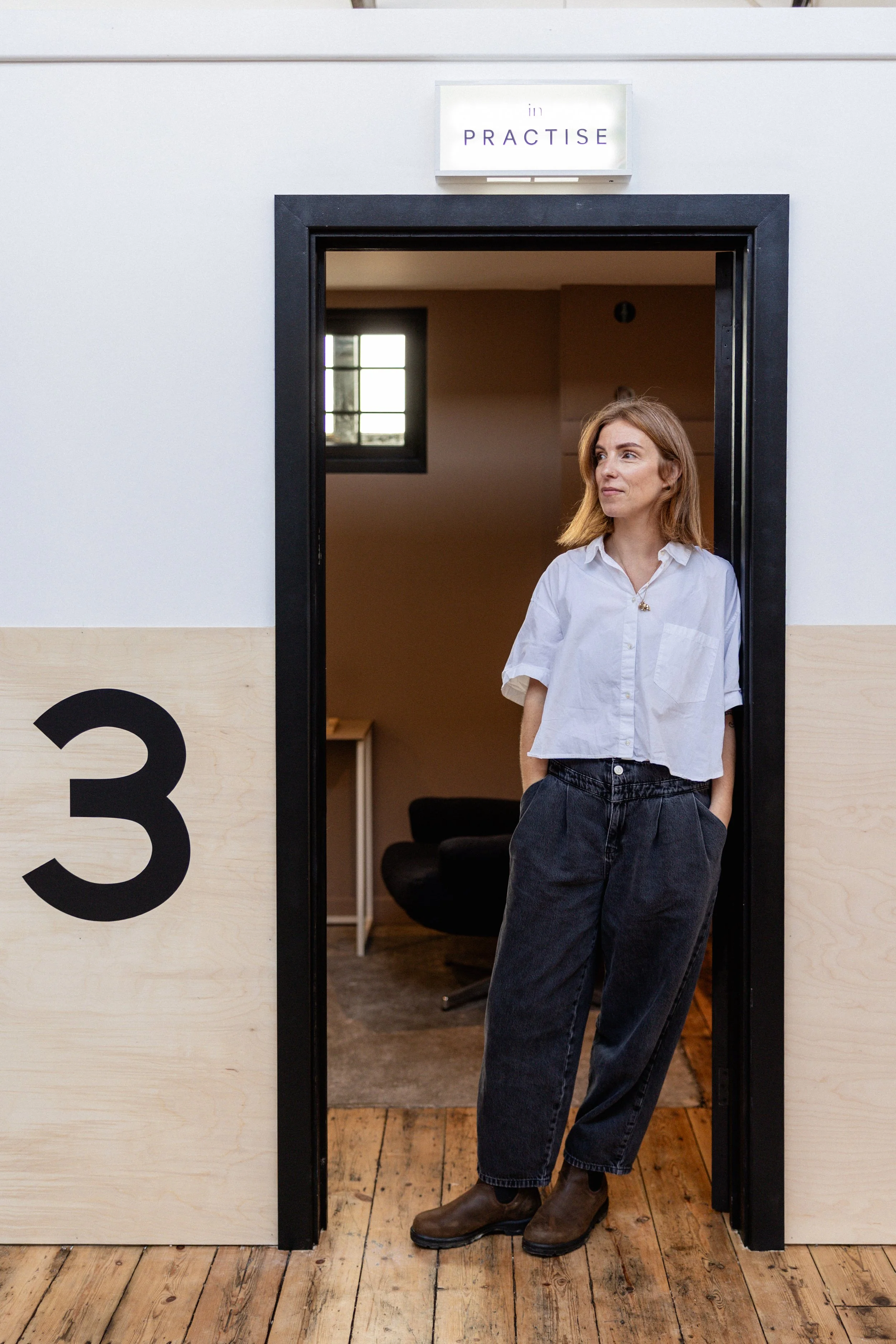
The Study is located in a dedicated therapy centre in the heart of Wivenhoe, with training provided within a beautifully converted old timber joinery factory in Colchester’s surrounding countryside.
About the People
Nelly Randall and Ryan Manning are the founders and principal therapists at The Study. Both hold a First Class BA Hons’degrees in Counselling and Psychotherapy from the University of East Anglia. Nelly has Coaching qualifications from City and Guilds and the Institute of Leadership and Management, and further training in couples therapy and end of life therapy. Ryan is a member at The Stockwell Centre, and is completing a Masters in Psychoanalytic Studies at Essex University. Nelly is completing her Masters at the University of East Anglia. They are both registered members of the British Association of Counselling and Psychotherapy.
Whether you are seeking support for a specific difficulty or looking for a reflective space to better understand yourself, our practice is here to meet you where you are.

Most of us develop ways of managing life that make sense at the time. We adapt to relationships, experiences and expectations, often without being particularly aware that we are doing it. those ways of coping continue long after they are useful, leaving us feeling stuck,anxious, disconnected, overwhelmed or unsure of ourselves.
Therapy can help us understand how we have come to be where we are. That might involve exploring the past, but not for the sake of endlessly looking backwards. It might mean noticing the assumptions we make, the roles we fall into, what we expect from other people, or what feels difficult to allow or express.
The relationship in therapy matters enormously. We understand ourselves partly through our relationships with other people, and therapy is no exception. What develops between us can become part of the work: familiar patterns can be noticed, assumptions questioned, and different ways of relating experienced rather than simply talked about.
There is no formula for doing this. Sometimes you may need space to think and speak without being hurried towards a solution. At other times I may be more active: asking questions, offering an observation, making connections or bringing another perspective. I draw on different therapeutic approaches according to what is useful, rather than expecting you to fit a particular model.
Finding the right therapist for you is important. I offer a free initial phone call, giving you the chance to get a sense of me and how I work, and whether I might be the right fit for you.
About the Practice